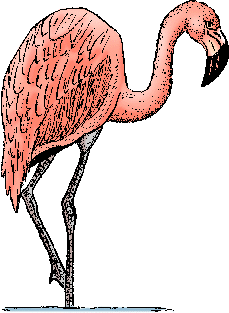
: any of several large aquatic birds (family Phoenicopteridae) with long legs and neck, webbed feet, a broad lamellate bill resembling that of a duck but abruptly bent downward, and usually rosy-white plumage with scarlet wing coverts and black wing quills
Illustration of flamingo
Examples of flamingo in a Sentence
Recent Examples on the Web
Examples are automatically compiled from online sources to
show current usage.Read More
Opinions expressed in the examples do not represent those of Merriam-Webster or its editors.
Send us feedback.
Both are protected areas with stunning beaches, dramatic cliffs, and unique wildlife, like dolphins and flamingos.—
Kathleen Peddicord,
Forbes.com,
28 Aug. 2026 The seventh-floor Grand Dame Villas at the Rooftop feel like a hotel within a hotel, with just seven rooms decked out in a sophisticated red palette, black-and-white flamingo wallpaper, and floor-to-ceiling windows.—
Condé Nast,
Condé Nast Traveler,
25 Aug. 2026 Sterling could be seen snuggling up to her father as Bronze sat on his lap, while Patrick appeared to be tickling Golden, who lay next to mom Brittany in a flamingo print onesie.—
Kirsty Hatcher,
PEOPLE,
18 Aug. 2026 The centerpiece of event is the flamingo walk, in which the Zoo's ambassador flamingos walk through the campus right along side the guests.—
Libby Smith,
CBS News,
12 Aug. 2026 See All Example Sentences for flamingo
Word History
Etymology
obsolete Spanish flamengo (now flamenco), literally, Fleming, German (conventionally thought of as ruddy-complexioned)
: any of several rosy-white birds with scarlet wings, a very long neck and legs, and a broad bill bent down at the end that are often found wading in shallow water
Etymology
from Portuguese flamingo "flamingo," from Spanish flamenco "flamingo," derived from Latin flamma "flame"; so called from the fiery red feathers on the underside of the wings


 Copy Citation