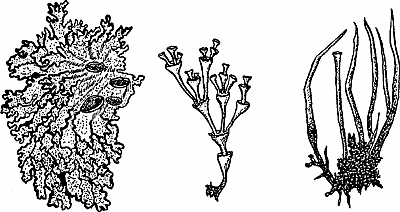
: any of numerous complex plantlike organisms made up of an alga or a cyanobacterium and a fungus growing in symbiotic association on a solid surface (such as on a rock or the bark of trees)
Note:
The main body of the lichen, known as the thallus, is formed by fungal filaments which surround the photosynthetic algal or cyanobacterial cells. The lichen is usually described as having a leaflike (foliose), crusty (crustose), or branching shrub-like (fruticose) form. Lichens often play an important part in the weathering of rocks and include some that are sources of natural dyes.
2
: any of several skin diseases characterized by the eruptions of flat papules
Examples are automatically compiled from online sources to
show current usage.Read More
Opinions expressed in the examples do not represent those of Merriam-Webster or its editors.
Send us feedback.
And the lichen also avoids non-bearing rocks like granite, sandstone, and quartzite, where its occurrence dropped to less than one percent.—
Mrigakshi Dixit,
Interesting Engineering,
24 Aug. 2026 Mosses and lichens filled the hollows, while yellowish dead man’s fingers — a spooky and thus aptly named fungus — curled among low-growing rhododendrons that perfumed the air with warm, woody notes.—
Denise Hruby,
Miami Herald,
21 Aug. 2026 This treatment should prevent further lichen growth and cause old ones to decline.—
Tom MacCubbin,
The Orlando Sentinel,
15 Aug. 2026 Others say it was inspired by the red lichen that spreads around its summit.—
Tara Massouleh McCay,
Southern Living,
17 June 2026 See All Example Sentences for lichen
Word History
Etymology
Latin, from Greek leichēn, lichēn, from leichein to lick