Did You Know?
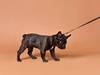
Imagine walking a dog down a sidewalk in a neighborhood full of delicious smells and other temptations—it’s easy to picture your pooch barking and straining at the leash to chase a squirrel, or dragging you toward something enticingly (to them) stinky, right? But can you imagine saying to your doggo in response, “Quit being so obstreperous!” Probably not. Obstreperous has a much more formal flair than words, such as stubborn or unruly, used to describe similar behavior. As such it’s unlikely to be used in casual speech or contexts like the one above. The word comes from a combination of the handy Latin prefix ob- (meaning “against”) and strepere, a verb meaning “to make a noise”; someone who is obstreperous can be thought of as literally making noise to rebel against something, much like a protesting crowd or an unruly child. Strepere has made little noise in the English lexicon, however; in addition to obstreperous it seems only to have contributed to the rarely encountered strepitous and its synonym strepitant, which mean “characterized or accompanied by much noise”—that is, “noisy.”